Falangism
Spanish authoritarian nationalism of Catholic and syndicalist inspiration, advocating a corporatist state, national unity, and social hierarchy, becoming the ideological pillar of Franco's regime in Spain.
Home / Ideologies / Falangism
Spanish authoritarian nationalism of Catholic and syndicalist inspiration, advocating a corporatist state, national unity, and social hierarchy, becoming the ideological pillar of Franco's regime in Spain.
In one sentence
I want a Catholic corporatist state, united under an authoritarian chief, with vertical unions organizing labor and protected trade.
Political topics
Leans further toward autocracy than 87% of the 263 ideologies in the catalog.
Of all the topics, Representation is where it stands furthest from the rest.
On Technology, it sits close to the catalog median.
Here it shares common ground with most ideologies.
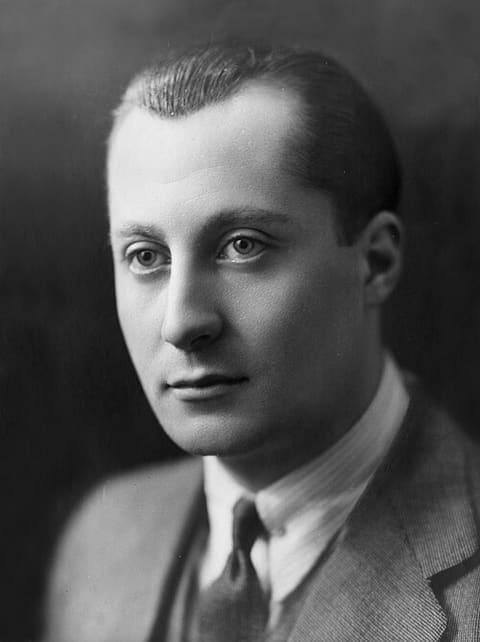
Founder of the Spanish Falange, Primo de Rivera created national syndicalism, advocating a corporatist, nationalist, Catholic state against liberalism and Marxism, becoming a martyr of the Francoist right.
Closest, by dimension
Other compatible profiles

The most distant
Reference country
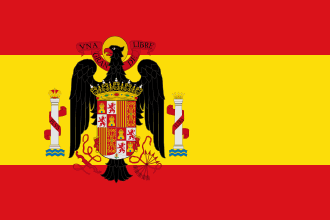
A dictatorship born of the Civil War, Franco's Spain was an authoritarian, Catholic, corporatist regime that united nationalism and political repression and lasted until the democratic transition after the dictator's death.
Other close countries

A single-party socialist state, China unites the absolute political control of the Communist Party with a state-directed market economy, becoming a global industrial, technological, and geopolitical power.
Also close, by dimension

The most distant
A militarist city-state of Ancient Greece, Sparta organized its whole society around war, with a mixed regime of kings and council, rigid discipline, austerity, and dominance over a vast subjugated population.
Also close, by dimension
The most distant
Ideological proximity
Closest within Third Position
Nationalist and syndicalist current that rejects liberalism and Marxism, advocating national unity, corporatist organization of labor, authoritarian social justice, and popular mobilization around the state.
Getúlio Vargas's Estado Novo doctrine joining economic nationalism, a centralized state, state-tied unions, labor law and state firms such as Petrobras, against the regional oligarchies and liberalism.
Authoritarian nationalist movement that arose in 1930s Brazil, Christian and corporatist, with the motto God, Fatherland and Family, a mass aesthetic and opposition to liberalism and communism.
Closest in other spectrums
Current that preserves order, tradition, and hierarchy through a strong state, restricting freedoms and political participation in the name of social stability, morality, religion, and established authority.
Christian theocratist doctrine that subordinates political power to religious authority, holding that divine law and the Church should govern the state and customs, from medieval and papal ultramontanism to modern reconstructionist projects.
Defense of monarchy with unlimited power concentrated in the sovereign, legitimized by tradition or divine right, without a constitution or parliament to restrict the king's authority over state and society.
The most distant ideology
Crypto-AnarchismLibertarian20%