Authoritarian Capitalism
Model that combines a market economy and private property with a closed political regime, in which the state guarantees order, growth, and stability while restricting civil liberties and political competition.
Home / Ideologies / Authoritarian Capitalism
Model that combines a market economy and private property with a closed political regime, in which the state guarantees order, growth, and stability while restricting civil liberties and political competition.
In one sentence
I want a market economy with private property, under a closed state that guarantees order and growth by restricting political competition.
Political topics
Leans further toward autocracy than 90% of the 263 ideologies in the catalog.
Of all the topics, Representation is where it stands furthest from the rest.
On Free market, it sits close to the catalog median.
Here it shares common ground with most ideologies.
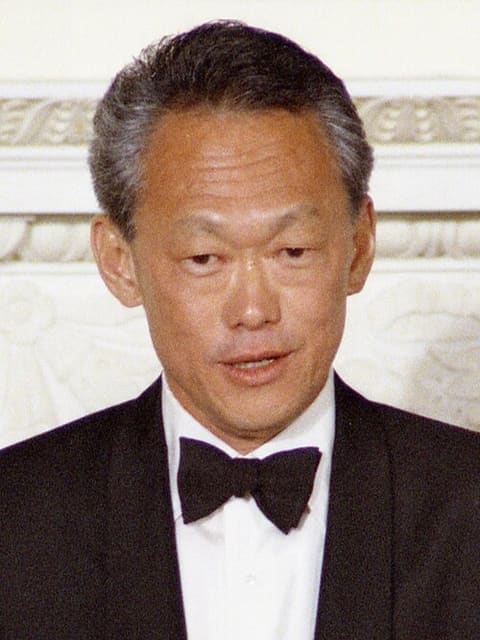
Founder of Singapore, Lee Kuan Yew transformed the city-state into a model of authoritarian capitalism, uniting open markets, technocratic meritocracy, strict order, and heavily restricted political freedoms.
Closest, by dimension
Other compatible profiles
The most distant
Reference country
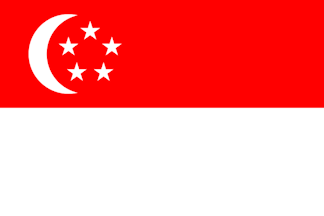
An Asian city-state, Singapore is a parliamentary republic dominated by a single party, combining open capitalism, efficient technocratic management, strict order, and limited political freedoms in the name of progress.
Other close countries
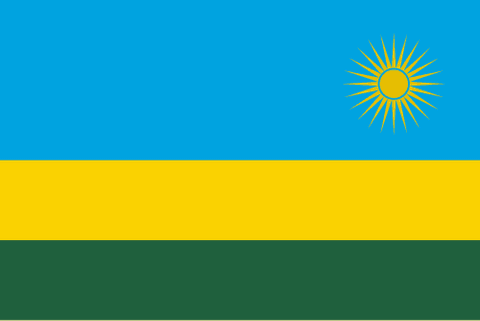
An authoritarian developmental state under Paul Kagame since 2000, Rwanda rebuilt after the 1994 genocide, bans ethnic discourse, restricts the opposition, grows with a tech focus and, per the UN, backs the M23 in Congo.
Also close, by dimension
The most distant
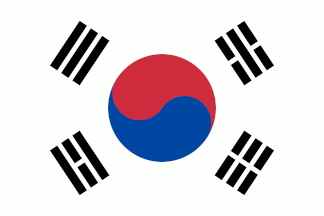
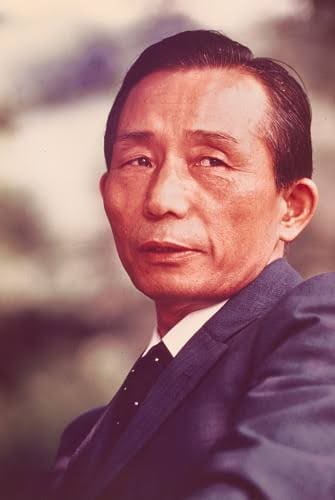
Under Park Chung Hee, South Korea combined military-authoritarian rule, rigid anti-communism, social discipline, and state planning aimed at export-led industrialization, building the major chaebols and preparing the country's technological rise.
Also close, by dimension
The most distant
Ideological proximity
Closest within Far-Right
Regime centered on the armed forces as the core of political power, governing by junta or military hierarchy, with centralization, discipline, a high value on order and expansionism, and civilian politics subordinate to military command.
Doctrine that defends the territorial, military and economic expansion of a nation over other peoples and territories, keeping colonies and spheres of influence tied to the interests of the metropole through military and political power.
Caesarist current that legitimises a charismatic leader by plebiscite above parties, combining personal authority, bureaucratic centralisation, military mobilisation and state-led modernising reforms.
Closest in other spectrums
Model inspired by Park Chung-hee's regime, combining state-led industrialization, credit for private firms, and planning with anti-communist political repression.
Current that joins the totalitarian authoritarianism of fascism to digital surveillance, artificial intelligence and technological control of the population, using technique to secure order and national unity.
Nationalist and syndicalist current that rejects liberalism and Marxism, advocating national unity, corporatist organization of labor, authoritarian social justice, and popular mobilization around the state.
The most distant ideology
CommunalismAnarchist22%