Lassallean Socialism
Socialist current that seeks to emancipate workers through the national state itself, with universal suffrage, producer cooperatives funded by public money and an explicit refusal of the revolutionary path.
Home / Ideologies / Lassallean Socialism
Socialist current that seeks to emancipate workers through the national state itself, with universal suffrage, producer cooperatives funded by public money and an explicit refusal of the revolutionary path.
In one sentence
I want to emancipate the worker through universal suffrage and cooperatives funded by the national state itself, without the revolutionary path.
Political topics
Leans further toward liberty than 78% of the 263 ideologies in the catalog.
Of all the topics, Power is where it stands furthest from the rest.
On Technology, it sits practically at the catalog median.
Here it shares common ground with most ideologies.
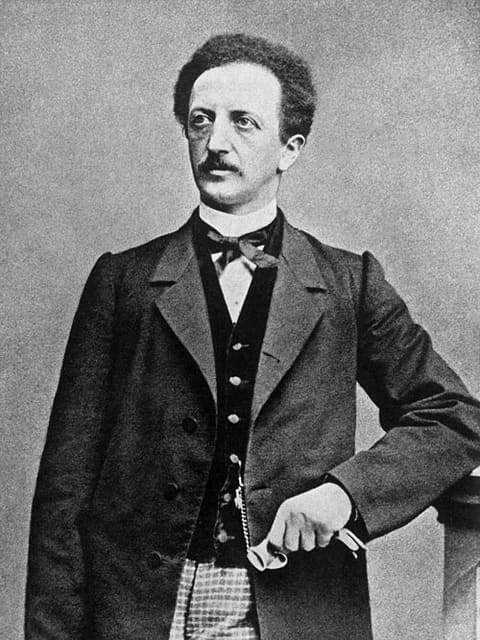
A pioneer of state socialism, Lassalle championed universal suffrage and state-funded cooperatives, founding the first major German workers' party and influencing European social democracy.
Closest, by dimension
Other compatible profiles
The most distant
Reference country
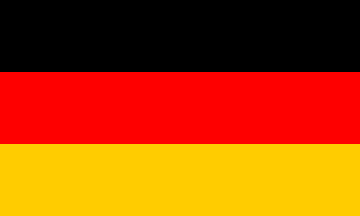
A parliamentary federal republic, Germany is Europe's largest economy, with a social market economy, a strong export industry, and a central role in the European Union, uniting democratic stability and geopolitical weight.
Other close countries

A European semi-presidential republic, France combines a strong republican and secular tradition, a robust welfare state, a mixed economy, and a prominent diplomatic, cultural, and military role in the European Union and the world.
Also close, by dimension
The most distant

Under Allende's Popular Unity, Chile attempted democratic socialism through copper and bank nationalization, agrarian reform, and economic planning until the 1973 military coup.
Also close, by dimension

The most distant
Ideological proximity
Closest within Left
Current that advocates industrialization, national sovereignty, and strategic state planning, seeking to modernize the economy through public investment, productive protection, and coordination between government, science, and national companies.
A current that sees the unitary, centralized state as the guarantor of individual liberty: uniform law, secularism and single citizenship dismantle the local, clerical and corporate privileges that would oppress the individual without a strong national power.
A 1970s Western European communist current that sought a national path to socialism through elections, party pluralism and civil liberties, independent of Moscow, with a mixed economy under democratic planning.
Closest in other spectrums
Marx's original doctrine, analyzing history as class struggle and predicting capitalism's overcoming through proletarian revolution, with abolition of private ownership of the means of production and strong criticism of religion.
Nationalism based on citizenship and shared values rather than ethnicity, defining the nation by adherence to common laws and institutions, open to all who accept its democratic and civic principles.
Final stage theorized by Marx and Engels: a classless, stateless society without private ownership of the means of production, with collective production and distribution according to need, superseding capitalism and the transitional socialist phase.
The most distant ideology
FeudalismFar-Right38%